
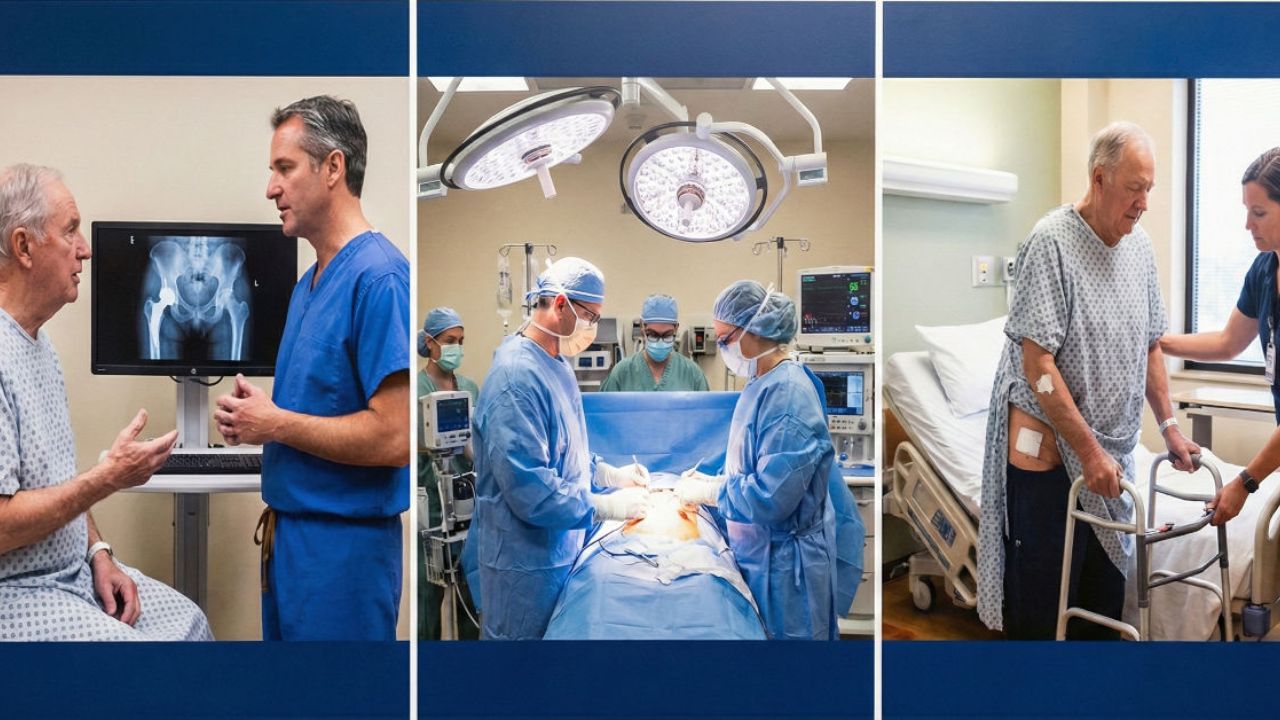
Hip replacement surgery is one of the most reliable procedures in modern orthopedics. It helps reduce pain, improve mobility, and restore independence when other treatments no longer provide relief. If you are preparing for the operation, understanding what happens before, during, and after the procedure can help you feel more confident and ready. In this article, I’ll explain the full journey in simple and clear language so you know exactly what to expect.
What Is Hip Replacement Surgery?
A hip replacement, also called total hip arthroplasty, is a procedure where the damaged bones and cartilage inside the hip joint are removed and replaced with artificial parts. These new components—usually made of metal, ceramic, or strong plastic—create a new ball-and-socket joint that moves smoothly and reduces pain.
People who usually benefit from hip replacement include those with:
- Severe osteoarthritis
- Rheumatoid arthritis
- Hip fractures
- Long-term hip pain that limits daily activities
- Pain that does not improve with medicines, injections, or physical therapy
When everyday tasks like walking, climbing stairs, or even sleeping become difficult due to hip pain, surgery becomes a strong option.
Before the Procedure: How to Prepare
Preparing well before surgery can improve both safety and recovery. Here are the key steps your medical team will guide you through:
1. Medical Evaluation and Tests
Your doctor will carefully review your health history. You may be asked to complete:
- Blood tests
- X-rays or other imaging
- ECG to check heart rhythm
- Physical examination
These help the surgeon plan the size, placement, and type of implant that fits your body.
2. Pre-Surgical Optimization
Improving your overall health boosts your recovery. You may be advised to:
- Stop smoking several weeks before surgery
- Maintain a healthy diet
- Manage blood pressure, diabetes, or other conditions
- Lose weight if necessary to reduce joint stress
Some patients also begin light strengthening exercises known as “prehab” to prepare the muscles around the hip.
3. Medication Review
Your doctors will review all medications, including supplements. Some medicines—especially blood thinners—may need to be paused before surgery. Always follow your doctor’s instructions closely.
4. Preparing Your Home
Since mobility will be limited for a short time after surgery, it helps to:
- Remove loose rugs and clutter
- Set up a comfortable resting area
- Place essential items within easy reach
- Arrange help for cooking, cleaning, and transportation
Many patients also use a raised toilet seat and grab bars for safer movement.
5. Knowing What to Expect
Before surgery, ask your doctor:
- Which surgical technique will be used?
- What implant type is recommended?
- How long is the hospital stay?
- When can you start walking?
- What pain control methods will be used?
Good communication helps reduce stress on the day of surgery.
During the Procedure: What Happens in the Operating Room
On the day of surgery, you will meet your surgeon, anesthesiologist, and nurses. Each plays a role in keeping you comfortable and safe.
1. Anesthesia
You will receive either:
- Spinal anesthesia, which numbs the lower body, sometimes with light sedation
- General anesthesia, which puts you fully asleep
Both methods are safe, and your anesthesiologist will explain the best choice for you.
2. The Surgical Process
The surgeon makes an incision to access your hip joint. The damaged bone and cartilage are carefully removed. Then the artificial parts—known as implants—are placed into the pelvic socket and the top of the thigh bone. These components may be secured with bone cement or designed to allow natural bone to grow onto them.
3. Duration and Safety
The surgery usually lasts 1–2 hours. During this time, the team checks:
- Implant stability
- Leg length balance
- Joint movement
Afterward, the incision is closed, and you are moved to recovery.
After the Procedure: Early Recovery
Recovery begins almost immediately after surgery.
1. Waking Up in Recovery
You will gradually wake up as the anesthesia wears off. Nurses will monitor your:
- Blood pressure
- Pain level
- Wound condition
- Ability to move your feet and legs
Pain medication is given early to keep you comfortable.
2. Standing and Walking
Most patients stand or take a few steps with a walker or crutches on the same day or the morning after surgery. Early movement helps:
- Prevent blood clots
- Reduce stiffness
- Speed recovery
A physical therapist will teach you safe techniques to sit, stand, and move.
3. Preventing Complications
The team will help you reduce risks by providing:
- Blood-thinning medication if needed
- Compression stockings
- Breathing exercises
- Instructions for wound care
You will be discharged once you can walk safely, manage pain, and follow instructions at home. Many patients go home within 1–3 days.
The Weeks After Surgery: Healing and Rehabilitation
Recovery continues at home with a focus on strengthening and gentle movement.
1. First Two Weeks
You may rely on a walker or crutches. Pain and swelling are normal but should slowly improve. You will do exercises several times a day to:
- Strengthen the hip muscles
- Increase flexibility
- Improve circulation
Resting with your leg elevated helps reduce swelling.
2. Weeks 3–6
Walking becomes easier, and some patients switch to a cane. You may begin:
- Driving (with doctor approval)
- Light chores
- Short outdoor walks
You should still avoid bending too far, twisting sharply, or crossing your legs if instructed by your surgeon.
3. Three Months After Surgery
Most people experience major improvements in pain relief and function. You can return to many everyday activities such as:
- Walking longer distances
- Swimming
- Stationary biking
- Gardening
Strength and confidence continue to grow.
4. Six Months to One Year
The hip joint becomes stronger and more natural-feeling. Many people forget they even have an artificial hip. With proper care, hip replacements can last for decades.
Long-Term Living With a Hip Replacement
To keep your new hip working well:
- Maintain a healthy weight
- Stay active with low-impact activities
- Avoid high-impact sports like running or jumping
- Attend follow-up appointments
- Report sudden pain, swelling, or changes in mobility
Activities such as walking, swimming, golfing, and cycling are usually encouraged.
When to Contact Your Doctor
Call your doctor immediately if you notice:
- Increasing redness or drainage from the incision
- Fever or chills
- Sudden severe hip pain
- Shortness of breath or chest pain
- Swelling or pain in the calf
These may signal complications that need urgent attention.
Conclusion
Hip replacement surgery is a life-changing procedure that can restore mobility, ease long-term pain, and greatly improve quality of life. Although the idea of surgery can be intimidating, understanding each stage—from preparation to recovery—can make the journey smoother and more reassuring. With proper planning, a skilled surgical team, and dedicated rehabilitation, most people return to their daily activities with greater comfort and independence.
If you are researching treatment options or considering traveling for care, many people choose to consult the best hip replacement doctors in Turkey, known for their expertise, advanced technology, and patient-focused approach. If you’d like, I can also help you create a preparation checklist, compare surgical approaches, or explain what makes a surgeon highly qualified for hip replacement surgery.